Real Cricket™
- 4.3
- Rating
- 50.00M
- Installs
- Free
- Price

 Analysis by App-foxy
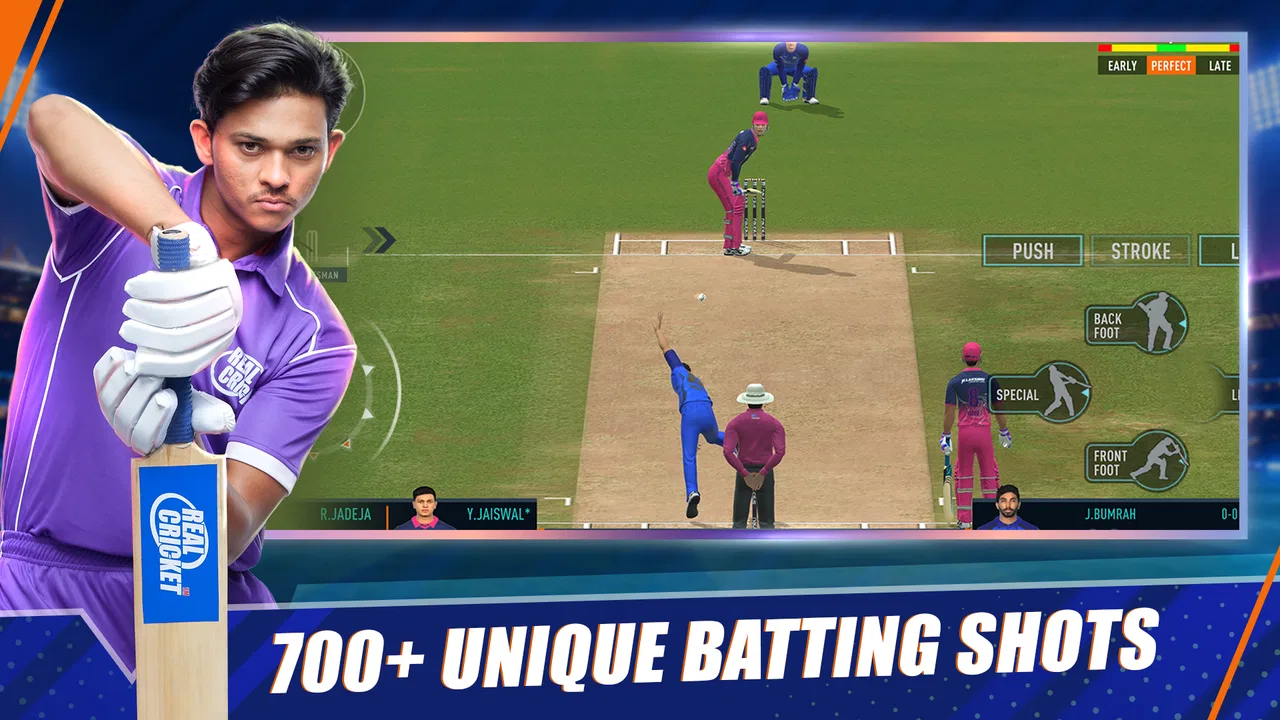
Cricket games often promise a quick match and then turn into a complicated collection of menus, upgrades, and waiting screens. Real Cricket™ takes a more serious simulation approach, built around leagues, World Cups, and challenges rather than a single casual batting toy. I spent time looking at it as a sports game you might actually keep on your phone, and my overall impression is that it rewards patience more than frantic tapping. It can feel satisfying when you read a bowler correctly, place a shot into a gap, or defend a difficult delivery, but it is not designed for someone who wants every match to be effortless.
That distinction matters before you install it. This is a free cricket game from KRAFTON, Inc., rated for Everyone, with a 4.2 average from around 850 thousand ratings and more than 50 million installs. Those figures suggest a well-established mobile title rather than a small experiment. The game is currently listed as version 4.6 and runs on Android 7.0 or later. Optional purchases range from $0.25 to $595.00 per item, so I would approach the in-game economy carefully, especially if children use the device.
How Real Cricket™ feels during ordinary play
I find the ordinary-play rhythm works best when I treat each delivery as a small decision rather than rushing toward the next score. That makes even a short match useful practice: I can notice whether patience or a more attacking response suits the situation. It also helps set up the question of how the game’s feedback shapes what I try next.
You May Also Like

 Google Keep - Notes and lists
Google Keep’s Quiet Growth Shows the Appeal of Simpler Notes
As mobile work gets busier, Google Keep keeps winning a simple contest: capture a thought quickly, find it later, and get on with the day.

 Blood Strike: 2.5 Anniversary
Blood Strike’s Loadouts Turn Every Drop Into a Tactical Gamble
A close look at Blood Strike’s custom loadouts: how fast access to signature weapons reshapes its battle royale rhythm, rewards preparation, and narrows the gap between fights.

 Pandora - Music & Podcasts
Pandora’s Music Is Easy to Start, but Harder to Recover
Pandora’s strength is its low-effort path from a seed to a station. Its weak spot is how much confidence it asks you to place in connection, setup, and quiet recovery.

 8 Ball Pool
 Is Built on Rivalries, Rematches, and Routine
A close look at the rivalries, rematches, shared routines, and unanswered safety questions that turn a quick pool match into a persistent mobile community.

 Samsung Music
’s Quiet Strength Is Playing What You Already Own
Its reach comes less from spectacle than from dependable access to a personal library. That simplicity is both the app’s strongest retention engine and its ceiling.

 AccuWeather: Weather Radar
AccuWeather Review: A Quick, Clear Forecast for Everyday Decisions
For everyday plans, the best forecast is the one you can understand quickly. AccuWeather makes rain timing, radar, and local conditions easy to act on, with a few trade-offs.
More From Our News Desk



Speed expectations before the first match
The first thing I noticed is that the game asks for a little attention before it becomes enjoyable. Cricket naturally has pauses between deliveries, and this title uses that rhythm instead of trying to disguise it. You choose your response, watch the ball develop, and then deal with the result. That makes the experience feel closer to a proper sports simulation than an arcade game where every second is filled with action.
For a short session, I would not treat it like a game that is always ready for a ten-second distraction. A single over can be quick, but the broader structure of leagues, tournaments, and challenges encourages longer sessions. If I have only a few minutes while waiting for a bus, I can still play, but I prefer starting when I have enough time to finish a meaningful section rather than stopping halfway through a competitive run.
The perceived speed also changes with your skill. Early on, I spend more time thinking about timing and shot selection, so the game feels deliberate. Once those decisions become familiar, the same sequence feels much faster. This is one of the better signs in a sports game: the pace improves because I understand the controls, not because the game removes the need to make decisions.
Players coming from very simple cricket apps may initially find the timing less forgiving. That is not necessarily a flaw, but it does create a learning curve. I would begin with lower-pressure challenges and use them to understand how different deliveries behave. Jumping straight into the most demanding competition can make the game seem slow or unfair when the real issue is that the player has not yet learned its timing language.
What happens during heavy-use moments
The busiest moments are not limited to a large score or a dramatic final over. They come when several decisions arrive close together: reading the bowler, choosing a shot, reacting to the field, and then preparing for the next delivery. These moments are where the simulation earns its place, because success depends less on random tapping and more on maintaining concentration.
Longer tournament sessions can also be demanding simply because they keep the player engaged for much longer than a quick arcade match. I recommend taking short breaks instead of treating a full competition as one uninterrupted sitting. That is practical advice, not just a comfort issue: tired reactions make a timing-based game feel less reliable, and mistakes become difficult to distinguish from control problems.
Another heavy-use situation is moving between different parts of the game. A player may want to switch from a league match to a World Cup-style competition or a challenge, and the experience becomes more menu-driven than a simple one-mode game. I like having variety, but it means the title is asking the phone and the player to manage more than just the match itself.
My useful habit here is to decide what I want to do before opening the game. If I am working through a particular challenge, I go directly there instead of browsing every available option. That reduces wasted time and makes the game feel more responsive, even though the underlying content has not changed.
Reliability and recovering from interruptions
For me, reliability in a mobile sports game is about more than whether a match starts. It is also about how comfortable the game feels when I pause, switch apps, or return after a break. Real Cricket™ is best treated as an active game rather than something I can casually leave open while doing other tasks. A delivery can require attention, and an interruption at the wrong moment can spoil the rhythm of an innings.
I would therefore avoid beginning an important match when I expect calls, navigation changes, or constant messaging. That is especially true for a close contest, where losing focus is more frustrating than losing because of a poor shot. For everyday use, I find it more dependable to play in a quiet window and finish a smaller objective than to leave a major competition repeatedly.
Recovery is also tied to patience. When a session does not go as planned, restarting immediately can lead to rushed decisions and a worse result. I get more from the game when I review what went wrong: was I attacking a delivery that deserved defense, or did I simply mistime the shot? That reflective loop is a genuine strength for players who enjoy improving, but it may feel like work to anyone looking for instant entertainment.
The large installed audience is reassuring in one sense: this is not an obscure title that feels abandoned on arrival. Still, popularity should not be confused with a guarantee that every device or connection will feel identical. Phones differ in available storage, background activity, display response, and thermal behavior. I would judge the experience on the specific phone being used, especially before committing to long sessions.
Device constraints and practical expectations
The Android requirement is modest, since the game supports Android 7.0 and later, but an operating-system requirement alone does not describe the whole experience. A phone that technically runs the game may still feel less comfortable during extended play than a newer device. Screen responsiveness, battery condition, and free storage can matter as much as the Android version when timing is central to the game.
I would start with a simple preparation routine. Close demanding background apps, keep the phone from becoming hot, and avoid playing while the battery is already struggling. These steps are particularly useful for a sports simulation because a small delay or a distracting slowdown can change the result of a delivery. They also help separate a device limitation from a problem with your own timing.
Resource demands are most noticeable when the game is used for a long stretch rather than a single brief match. A tournament session keeps the screen active, requires repeated input, and can make an older phone feel less comfortable over time. I would not call that a reason to avoid the game altogether, but I would be cautious about installing it on a low-capacity or aging device that already has trouble with other visually rich games.
Storage planning is worth considering too. Even when the initial installation is manageable, games that offer several competition paths and ongoing content can become less convenient on a phone with very little free space. I would leave room for normal system operation instead of filling the device completely. That is a small step, but it can prevent a good game from becoming an irritating part of phone maintenance.
The age rating of Everyone makes the title broadly approachable, but the purchase range deserves adult awareness. A free download does not mean every optional item is free, and the upper end of the listed range is substantial. If a child is playing, I would review the device’s purchase controls before handing over the phone. For an adult, the same advice is useful because competitive progression can make optional spending feel tempting after a disappointing run.
Where it beats simpler cricket alternatives
Compared with lightweight cricket games that reduce the sport to one-tap batting, this title gives me more reason to return. Leagues, World Cups, and challenges create separate goals, so I am not repeating exactly the same type of match every time. The advantage is depth: I can play for a trophy, test myself in a challenge, or simply work on reading deliveries.
The trade-off is that the extra structure makes the experience less immediate. A casual alternative may be better when I want a quick laugh or a match that requires almost no concentration. Real Cricket™ asks me to learn its rhythm and accept that a poor decision can have consequences. That is valuable for a cricket fan, but unnecessary friction for someone who only wants a few seconds of tapping.
It also compares differently with console-style sports games. A dedicated console title may offer a larger presentation and more elaborate controls, while this game’s strength is having a cricket-focused experience available on a phone. I would choose it when convenience and repeated short-to-medium sessions matter more than the full scale of a living-room simulation.
One non-obvious benefit is that the game can serve as a way to learn your own preference for cricket gameplay. Some players discover they enjoy defensive timing and patient accumulation more than constant boundary hunting. Others realize they prefer arcade speed. Because Real Cricket™ gives more weight to decisions, it helps reveal that preference quickly.
Small habits that improve the experience
My first tip is to treat challenges as practice rather than only as rewards to collect. They give a focused reason to repeat a situation, which is more useful than playing full matches without noticing why certain deliveries beat you. Once I identify a recurring mistake, I can adjust my approach instead of blaming the controls after every dismissal.
My second tip is to avoid spending early just to repair a disappointing session. The free entry point is enough to decide whether the batting rhythm, match length, and tournament structure suit you. Since individual purchases can be very small or extremely expensive, I would set a personal limit before becoming invested in progression. That keeps the competitive pressure from turning into an accidental shopping habit.
My third tip is to use the phone’s physical setup as part of your strategy. A stable grip and a clean screen sound obvious, but touch timing is less consistent when the device is sliding across a table or when the display is warm and smudged. I play more confidently with both hands available and notifications minimized. This does not make a difficult delivery easier, but it removes avoidable distractions.
My fourth tip is to judge a session by decision quality rather than only by the final score. A low-scoring innings can still teach me when to defend, while a lucky boundary streak may hide weak timing. This mindset makes the game less frustrating and gives the longer league structure a clearer purpose: gradual improvement rather than instant dominance.
Who should play it, and who should skip it
I would recommend this game to cricket fans who enjoy building confidence through repetition. It is a good fit if you like the idea of moving through leagues, taking on World Cup-style competition, and using challenges to sharpen specific skills. It also suits players who want a free sports game with enough structure to support regular play rather than a disposable one-match experience.
I would be more cautious if you dislike losing because of a mistimed input or if you want every match to feel relaxed. The simulation angle means that concentration matters, and the broader progression can make a session feel more involved than expected. Players with older phones should also test how comfortable the game feels before planning long tournaments, particularly if the device already runs hot or struggles with other demanding games.
It is not my first choice for a child using an unrestricted payment setup. The Everyone rating makes the content accessible, but the presence of optional purchases means the account and device settings still deserve attention. For a family phone, I would establish those boundaries first and then let the player decide whether the cricket itself is enjoyable.
For a realistic everyday scenario, imagine having half an hour after work before making dinner. I would use that time for a challenge or a contained part of a league run, not begin the biggest competition available. That gives me a clear stopping point and keeps the game from taking over the evening. On a commute with unreliable attention, I would choose a simpler arcade cricket option instead, because interruptions are more likely and the slower decision rhythm is harder to appreciate.
My performance verdict after living with the game
Real Cricket™ succeeds when I approach it as a thoughtful mobile sports simulation, not as a button-mashing diversion. Its speed feels best during focused play, its heavier moments reward preparation, and its range of competitions gives the game a reason to stay installed. The main limitations are equally clear: it needs attention, longer sessions can be demanding on both player and phone, and the purchase range calls for sensible boundaries.
The low minimum Android version makes it broadly reachable, while the current version and large install base make it feel like a mature choice in mobile cricket. Even so, I would not promise identical smoothness on every compatible phone. Device age, heat, battery condition, and background activity can all influence how comfortable a long match becomes.
My final recommendation is straightforward: try it if you want cricket decisions to matter and you enjoy improving over several sessions. Start with manageable challenges, protect your playtime from interruptions, and decide your spending limit before progression becomes emotional. If you want instant matches with almost no learning curve, choose a lighter alternative. If you want a more involved cricket game that can occupy a regular place on your phone, Real Cricket™ is a convincing free starting point, provided you are willing to meet it at its deliberate pace.
FAQs for Real Cricket™
01What are the device requirements for Real Cricket™?
Real Cricket™ requires a device with at least 2GB of RAM and Android 5.0 or iOS 10.0 and above. It's recommended to have a stable internet connection for multiplayer modes. Ensure you have enough storage space, as the game may require additional downloads for updates and features.
02Can I play Real Cricket™ offline?
Yes, Real Cricket™ offers offline gameplay modes. You can enjoy single-player tournaments and challenges without an internet connection. However, multiplayer modes, leaderboards, and live events require you to be online, so a stable internet connection is essential for those features.
03Are there in-app purchases in Real Cricket™?
Real Cricket™ includes in-app purchases that allow players to buy virtual currency, unlock special features, and acquire customization options for their teams. While the game is free to download, these purchases can enhance the gameplay experience, though they are completely optional.
04How often does Real Cricket™ receive updates?
Real Cricket™ receives regular updates to improve gameplay, fix bugs, and introduce new features. These updates often include new tournaments, teams, and gameplay enhancements. It's recommended to have automatic updates enabled to ensure you're always enjoying the latest version of the game.
05Is Real Cricket™ suitable for children?
Real Cricket™ is suitable for players aged 12 and above. The game includes realistic cricket simulations and competitive elements that can be enjoyed by older kids and adults. Parents should be aware of in-app purchases and may want to adjust settings accordingly to prevent unauthorized purchases.
Pros
- Realistic graphics enhance gameplay immersion.
- Variety of game modes keeps it engaging.
- Smooth controls for an intuitive experience.
- Regular updates with new features.
- Multiplayer mode for competitive play.
Cons
- In-app purchases can be costly.
- Requires a stable internet connection.
- Large file size may strain device storage.
- Occasional lag on lower-end devices.
- Some features locked behind paywall.

Real Cricket™
Gallery